
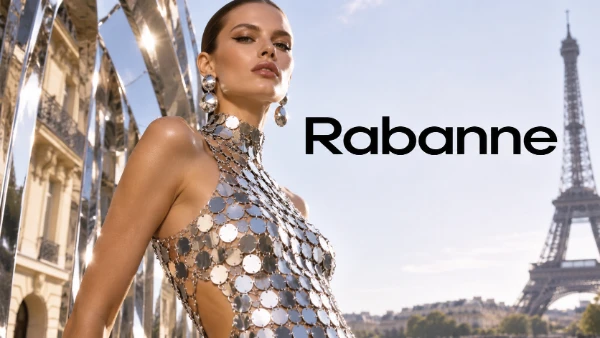
Rabanne After Julien Dossena: How Olivier Rousteing Is Preparing a New Era for the French Fashion House
Rabanne is entering one of the most significant transitions in its recent history. On 14 July 2026, the French fashion house officially appointed Olivier Rousteing as its new creative director, succeeding Julien Dossena after a remarkable 13-year tenure. The appointment brings together two distinctive forces in contemporary fashion: a house celebrated for its experimental materials and futuristic designs, and a designer who spent 14 years transforming Balmain into an internationally recognised luxury name. Rousteing’s arrival signals more than a change in creative leadership. It presents an opportunity to strengthen Rabanne’s relationship between fashion, fragrance and popular culture while preserving the unconventional identity established by founder Paco Rabanne in 1966. With his first runway collection scheduled for March 2027, attention is now turning to how Rousteing will interpret the house’s heritage and shape its next chapter.
Julien Dossena’s Legacy and the Transformation of Rabanne
When Julien Dossena joined Paco Rabanne as creative director in 2013, he inherited a fashion house with an extraordinary history but a challenging contemporary identity. Founded by Spanish-born designer Francisco Rabaneda Cuervo, professionally known as Paco Rabanne, the house became famous during the 1960s for challenging conventional dressmaking. Its first presentation, held at the Hôtel George V in Paris on 1 February 1966, featured twelve experimental dresses constructed from contemporary materials, including plastic discs connected by metal rings. These unconventional techniques established the house’s signature approach to clothing, turning construction methods into an essential part of its visual identity. Decades later, Dossena faced the challenge of making this heritage relevant to modern wardrobes without reducing the brand to nostalgic reproductions of its most famous creations.
Dossena approached that responsibility by introducing greater versatility into Rabanne’s collections. Having previously worked alongside Nicolas Ghesquière at Balenciaga, he understood how experimental design could coexist with wearable clothing. His collections combined metallic surfaces, intricate embellishment and unconventional textures with tailoring, knitwear, printed dresses and everyday separates. Rather than presenting the famous chainmail dress as a historical object, he explored its possibilities through contemporary proportions and styling. This approach helped establish a recognisable design language that connected the founder’s radical ideas with the expectations of modern luxury customers. His work also demonstrated that Rabanne could offer more than spectacular eveningwear, expanding its creative identity into clothing and accessories suited to different occasions.
The transformation became particularly visible in 2023, when Paco Rabanne officially shortened its name to Rabanne. The change formed part of a wider effort to create a consistent identity across fashion and fragrance while introducing a refreshed visual direction. That same year, the house collaborated with H&M on a collection featuring clothing, accessories and selected home furnishings. Launched on 9 November 2023, the collaboration brought Rabanne’s metallic fabrics, decorative details and distinctive silhouettes to a broader audience. Dossena also gained recognition beyond the house when he designed a guest haute couture collection for Jean Paul Gaultier in July 2023. These achievements illustrated how his interpretation of Rabanne had developed from a specialist fashion proposition into a recognisable contemporary identity with international cultural appeal.
Why Julien Dossena’s Departure Marked a Turning Point
Rabanne announced the end of its collaboration with Dossena on 24 June 2026, bringing thirteen years of creative leadership to a close. The announcement was significant because long appointments had become increasingly unusual during a period of frequent leadership changes across major European fashion houses. Dossena had provided Rabanne with artistic consistency while establishing a clear relationship between its historic design principles and contemporary collections. Puig, the Spanish beauty and fashion group that owns Rabanne, publicly acknowledged his contribution to the house’s renewed international visibility and commercial development. His departure therefore represented more than the replacement of an individual designer: it marked the conclusion of a sustained programme of creative reconstruction.
One of Dossena’s most important achievements was demonstrating that Rabanne’s experimental heritage could remain commercially and culturally relevant. Under his direction, metallic dresses and chainmail-inspired accessories continued to attract attention, but the collections also included softer fabrics, contrasting prints and more relaxed silhouettes. The combination gave the house a broader visual identity while preserving the construction techniques that distinguished its founder. Nevertheless, the fashion and fragrance divisions operated with different commercial strengths. Rabanne’s perfumes had already achieved widespread international recognition, while its clothing remained comparatively specialised. This distinction created an opportunity for a successor capable of strengthening the connection between the house’s fashion image and its larger consumer audience.
Dossena’s departure also raised an important question about continuity. A new creative director could pursue a dramatic change in appearance, but abandoning the established identity would risk weakening the distinctive character that Rabanne had carefully rebuilt. The house’s metalwork, unconventional construction and futuristic influences are not simply decorative references; they are essential elements of its history. Consequently, the next stage requires a balance between preserving recognisable signatures and introducing fresh ideas. Rousteing’s appointment suggests that Puig sees an opportunity to achieve this through a stronger emphasis on glamour, cultural visibility and a more unified expression of the Rabanne name across different product categories.
Olivier Rousteing’s Appointment and His Vision for Rabanne
Olivier Rousteing brings extensive experience in leading an established French luxury house through a period of international expansion. Born in Bordeaux in 1985, he studied fashion at ESMOD before beginning his professional career at Roberto Cavalli, where he developed experience in womenswear design. In 2009, he joined Balmain, becoming its creative director in 2011 at just 25 years old. His appointment attracted considerable attention because of his age and the responsibility of directing a prestigious house with an established couture heritage. Over the following fourteen years, he developed a distinctive creative identity characterised by elaborate embellishment, structured silhouettes, confident glamour and a strong relationship with contemporary entertainment culture.
During his years at Balmain, Rousteing helped increase the house’s international visibility through celebrity relationships, memorable fashion shows and collaborations that extended beyond traditional luxury customers. His designs were worn by prominent figures including Beyoncé, Kim Kardashian and Rihanna, contributing to Balmain’s recognition among audiences who followed music and popular culture as closely as fashion. He also cultivated an extensive social media presence, communicating directly with followers and showing aspects of his creative process. His work included the widely publicised Balmain collaboration with H&M in 2015. These activities helped establish him as a designer capable of connecting the traditions of a Parisian fashion house with contemporary communication and consumer interests.
Rousteing left Balmain in November 2025 after fourteen years as creative director. His appointment at Rabanne eight months later represented an unusual opportunity to apply his experience to another French house with a highly recognisable aesthetic. Unlike Balmain, whose identity is strongly associated with tailoring, military influences and decorative craftsmanship, Rabanne has historically relied on material experimentation, sculptural construction and unconventional combinations of industrial elements. The distinction presents both a challenge and a creative opportunity. Rousteing cannot simply transfer his previous design language to Rabanne without risking the loss of its individuality. His success will depend on finding a relationship between his preference for expressive silhouettes and the construction techniques that define the house.
How Rousteing Could Reinterpret Rabanne’s Fashion Heritage
The relationship between Rousteing’s existing aesthetic and Rabanne’s historical identity offers several possible directions. Both share an interest in dramatic clothing, elaborate surfaces and memorable silhouettes, although their methods differ. At Balmain, Rousteing frequently relied on embroidery, decorative detailing and precisely shaped garments to produce visual impact. Rabanne’s heritage instead centres on assembling materials in unconventional ways, particularly metal discs, chains and linked surfaces. A successful combination could introduce a different interpretation of glamour, using the movement and reflective qualities of Rabanne’s signature materials alongside Rousteing’s understanding of proportion and structure. However, these possibilities remain informed expectations rather than confirmed details of his forthcoming collections.
Another important consideration is the relationship between spectacle and everyday wearability. Rabanne’s most recognisable garments often attract attention because of their striking construction, but a contemporary fashion house also needs products that customers can incorporate into regular wardrobes. Rousteing’s experience in developing collections that included tailoring, knitwear, accessories and eveningwear may prove useful in addressing this balance. The challenge will be to translate the house’s visual signatures into garments that remain comfortable and practical without losing their distinctive character. Bags, jewellery and smaller accessories could also provide opportunities for exploring metallic elements and decorative construction in forms that are accessible to customers who do not necessarily purchase statement dresses.
Rousteing has publicly acknowledged Dossena’s contribution to Rabanne and expressed admiration for the house’s experimental spirit. This recognition matters because his appointment follows a creative period that established a coherent identity rather than one that required complete reconstruction. His role is therefore likely to involve evolution rather than the abandonment of existing signatures. The first indication of his direction is expected to come through a pre-fall collection in November 2026, with his debut runway presentation scheduled during Paris Fashion Week in March 2027 for autumn/winter 2027. Until these collections are presented, predictions about specific garments, colours or creative themes should be treated cautiously. What is confirmed is that Rabanne has selected a designer whose professional experience combines luxury craftsmanship, strong visual identity and broad cultural recognition.

Rabanne’s Future: Fashion, Fragrance and International Growth
Rousteing’s appointment also has strategic significance for Puig, the Spanish group that controls Rabanne alongside other international beauty and fashion businesses. Fragrance has long been central to Rabanne’s commercial success, with products such as 1 Million, Lady Million, Invictus and Phantom helping establish its international reputation. The brand passed €1 billion in annual sales in 2023, demonstrating the substantial scale of its fragrance-led business. Its fashion collections, although influential in defining the house’s identity, occupy a different position within the overall commercial structure. Strengthening the relationship between these activities offers Puig an opportunity to create a more consistent image across products while retaining the distinctive characteristics of each category.
Rousteing’s experience may be particularly relevant to this objective because his work at Balmain extended beyond runway collections. He understands how a luxury house can communicate through fashion, collaborations, celebrity relationships and consumer products without relying exclusively on seasonal presentations. His appointment could help Rabanne develop stronger connections between the glamorous image of its fragrances and the experimental identity of its clothing. This does not necessarily mean that the house will abandon the more intellectual design approach developed under Dossena. Instead, the opportunity lies in making its visual identity recognisable across a wider range of products and communications. Any successful expansion will still depend on product quality, coherent design decisions and the ability to maintain customer trust.
The timing is also important. Rabanne celebrates sixty years since its foundation in 2026, giving the house an opportunity to reflect on its history while establishing a new direction. Its founder was recognised for challenging established assumptions about materials, construction and the presentation of clothing. His early collections demonstrated that fashion could incorporate techniques and objects normally associated with industrial design. These principles remain relevant at a time when designers are reconsidering the relationship between traditional craftsmanship and contemporary manufacturing. Rousteing inherits a substantial archive, but its value lies in the creative ideas behind the garments rather than their appearance alone. The strongest future collections will be those that reinterpret Rabanne’s experimental thinking instead of merely reproducing familiar metallic dresses.
What Will Define the Success of Rabanne’s New Creative Era?
The first major assessment of Rousteing’s leadership will come with his autumn/winter 2027 collection, scheduled for presentation in Paris in March 2027. Industry observers will be looking for evidence of a coherent design direction that reflects both the designer’s experience and the house’s heritage. The treatment of metalwork, the construction of dresses and the balance between statement pieces and wearable clothing will provide useful indications of his priorities. Equally important will be the degree to which the collection establishes a recognisable Rabanne identity rather than resembling an extension of his previous work at Balmain. A successful debut will need to demonstrate technical creativity alongside a convincing understanding of the house’s established visual language.
Longer-term success will be measured through more than critical responses to runway presentations. Rabanne will need to translate creative attention into sustained interest in ready-to-wear, bags, accessories and other categories. Customer demand, retail distribution and the consistency of successive collections will all influence the commercial impact of Rousteing’s appointment. Fragrance will remain a major part of the brand’s business, but a stronger fashion identity could reinforce its wider recognition and help develop relationships with new audiences. At the same time, excessive dependence on celebrity attention would carry risks if the products themselves failed to establish lasting appeal. Rousteing’s challenge is to use his communication experience to support the creative substance of Rabanne rather than allow publicity to become its defining feature.
As of November 2026, Rabanne’s next chapter remains at an early stage. The appointment of Olivier Rousteing is confirmed, but the full character of his creative direction will only become clear once his collections reach the public. Julien Dossena leaves behind a house whose experimental heritage has been successfully adapted to contemporary fashion, providing his successor with a strong foundation. Rousteing brings experience in international brand development, theatrical design and cultural communication, qualities that could strengthen Rabanne’s visibility across fashion and beauty. The central question is whether he can combine these strengths with the inventive construction and unconventional thinking that made the house distinctive sixty years ago. His first collections will reveal how that relationship develops and whether Rabanne can establish a new identity that respects its past while remaining relevant to a changing luxury market.