

Brunello Cucinelli: Ethical Luxury as a Business Model, Not a Slogan
Brunello Cucinelli is often described as the face of “ethical luxury”, yet in his case the phrase is not a marketing flourish. It is a structured, measurable and long-term business model rooted in Italian craftsmanship, human dignity and financial discipline. Founded in 1978 in Solomeo, Umbria, the company has grown into a publicly listed global brand while maintaining local production, careful supply chain control and a corporate culture built around what Cucinelli calls “humanistic capitalism”. As of 2026, Brunello Cucinelli S.p.A. operates more than 120 mono-brand boutiques worldwide, reports annual revenues exceeding €1.1 billion, and remains majority controlled by its founder and family. This combination of global scale and local responsibility explains why the company is frequently cited in discussions about sustainable luxury and stakeholder governance.
Humanistic Capitalism as Corporate Architecture
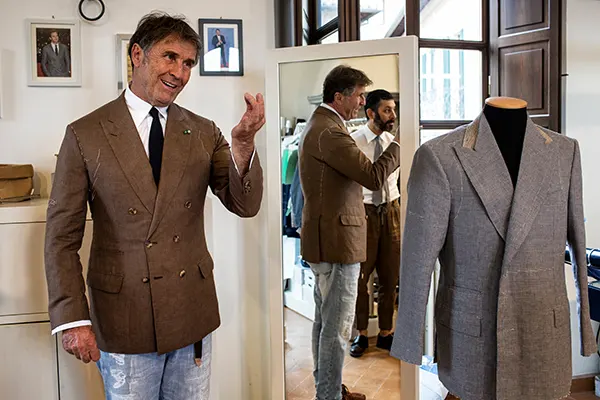
Brunello Cucinelli’s philosophy is grounded in the idea that profit should not be maximised at the expense of people. The company’s headquarters in Solomeo is not only an operational centre but also a cultural project. Cucinelli personally financed the restoration of the medieval village, including a theatre, library and artisan workshops. This was not philanthropy detached from business; it was an investment in the environment where employees live and work. The logic is straightforward: dignified surroundings contribute to quality craftsmanship and long-term loyalty.
Unlike many luxury groups that centralise production in cost-efficient regions, Brunello Cucinelli keeps the majority of its manufacturing in Italy. Around 50% of production is carried out internally, while the rest is entrusted to carefully selected local suppliers, many of them small family workshops in Umbria. This ecosystem model preserves artisanal skills and ensures tight quality control. It also reduces reputational risk, a factor increasingly relevant for luxury consumers who scrutinise sourcing and labour practices.
From a governance perspective, the company formalised its values through a Code of Ethics and a corporate charter that emphasises respect, fairness and balanced growth. Even after the IPO in 2012, Cucinelli retained a controlling stake, allowing him to protect the strategic direction from short-term market pressure. Financial transparency and consistent profitability have demonstrated that ethical positioning does not undermine shareholder returns; on the contrary, it can strengthen brand equity and investor confidence.
Work, Dignity and Measurable Standards
One of the most tangible aspects of the brand’s ethical stance is its approach to working conditions. Employees in Solomeo work standardised hours, and the company avoids excessive overtime. Cucinelli has publicly stated that emails are discouraged outside working hours, reinforcing boundaries between professional and personal life. While such policies may seem symbolic, they are embedded in the organisational culture and reflected in relatively low staff turnover compared to industry averages.
Compensation policies also aim to exceed regional norms. Salaries in the company’s Italian operations are typically positioned above industry minimums, particularly for skilled artisans. This is not framed as charity but as an investment in craftsmanship. High-end cashmere garments require experienced hands, and retaining those hands requires financial stability and respect. The economic rationale aligns with the ethical principle: quality and dignity are mutually reinforcing.
By 2026, sustainability reporting has become standard across the luxury sector, and Brunello Cucinelli publishes detailed non-financial disclosures covering environmental impact, energy use and supply chain practices. The company has invested in renewable energy systems for its facilities and continues to monitor emissions intensity. These initiatives are not presented as radical innovation but as responsible management consistent with long-term brand positioning.
Financial Performance Without Compromising Identity
A critical test for any value-driven company is financial resilience. Brunello Cucinelli has demonstrated steady revenue growth over the past decade, including post-pandemic recovery and expansion in the United States and Asia. In 2023 and 2024, the company reported double-digit revenue increases, driven by strong demand for high-quality knitwear and tailored pieces. By 2026, international markets account for the majority of sales, with the United States representing a key growth engine.
The brand’s pricing strategy reflects its positioning at the top end of the luxury segment. Cashmere sweaters often retail at several thousand pounds, yet discounting is tightly controlled. The company avoids aggressive promotional tactics, preferring controlled distribution through mono-brand boutiques and selected high-end department stores. This discipline protects margins and reinforces the perception of scarcity and exclusivity.
Importantly, growth has not relied on rapid diversification into unrelated categories. While the product range has expanded to include menswear, womenswear, accessories and limited lifestyle items, the core remains refined, understated luxury. This focus reduces operational complexity and prevents brand dilution. In financial terms, it supports consistent gross margins and predictable demand patterns.
IPO, Investor Relations and Long-Term Vision
When Brunello Cucinelli went public on the Italian Stock Exchange in 2012, some observers questioned whether a philosophy centred on human dignity could survive public market scrutiny. More than a decade later, the company’s market capitalisation and stable performance suggest that the model has adapted rather than weakened. The founder’s continued leadership has provided continuity, while professional management structures ensure operational efficiency.
Investor communications consistently emphasise moderate, sustainable growth rather than aggressive expansion targets. The company outlines medium-term objectives with cautious projections, prioritising brand integrity over short-term spikes in revenue. This approach resonates with long-term investors who value predictability and reputational strength in the luxury sector.
Dividend policy and capital allocation further illustrate balance. Investments are directed towards retail network optimisation, digital infrastructure and production capabilities in Italy, rather than speculative acquisitions. As a result, the business maintains a solid balance sheet and manageable debt levels, reinforcing trust among stakeholders.
Luxury, Sustainability and Cultural Responsibility in 2026
By 2026, sustainability has shifted from a niche concern to a regulatory and reputational requirement. European legislation on supply chain transparency and environmental disclosure has tightened expectations for fashion companies. Brunello Cucinelli’s existing commitment to local production and traceability places it in a comparatively strong position. While no global fashion brand is impact-free, the company’s shorter supply chains and focus on natural fibres mitigate certain environmental risks.
Cashmere sourcing remains a sensitive topic across the industry due to concerns about overgrazing and land degradation in producing regions. The company collaborates with suppliers to improve traceability and animal welfare standards, though it does not claim complete vertical integration. Instead, it communicates incremental progress and partnerships, reflecting a realistic rather than idealised narrative.
Culturally, the brand promotes a restrained aesthetic that contrasts with fast-fashion cycles. Collections are designed for longevity, with neutral palettes and classic silhouettes intended to remain relevant for years. This design philosophy supports the broader argument that true luxury lies in durability and craftsmanship, not seasonal excess.
Ethical Luxury as Competitive Advantage
In strategic terms, ethical positioning differentiates Brunello Cucinelli within a crowded luxury market dominated by conglomerates. While larger groups benefit from economies of scale, they also face scrutiny over complex global supply chains. Cucinelli’s comparatively focused structure enables clearer storytelling and accountability, attributes increasingly valued by affluent consumers.
The concept of “ethical luxury” gains credibility when it is embedded in governance, operations and financial results. In this case, ethics are visible in restored architecture, working hours, supplier relationships and transparent reporting. These elements create coherence between narrative and practice, reducing the gap that often undermines corporate social responsibility claims.
Ultimately, Brunello Cucinelli demonstrates that values and profitability need not be opposing forces. As of 2026, the company stands as evidence that a luxury house can pursue growth, reward shareholders and uphold a human-centred philosophy simultaneously. The model is not easily replicable, as it relies on consistent leadership and cultural alignment, but it offers a concrete example of how ethical principles can function as the foundation of a modern global business.