
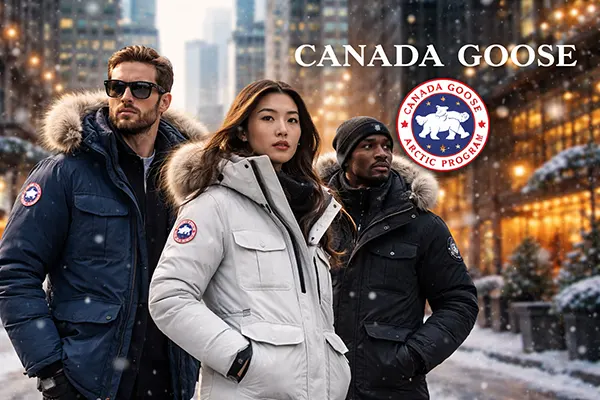
Canada Goose: How Functional Extreme Cold Gear Became Urban Style
Canada Goose began as a niche manufacturer focused on survival-grade outerwear for some of the harshest climates on Earth. Over time, it has transformed into a recognisable symbol of urban fashion, worn not only in Arctic conditions but also on city streets from London to Toronto. This shift did not happen by chance: it reflects broader changes in consumer behaviour, design philosophy, and the growing demand for clothing that combines performance with identity.
Origins of Canada Goose and Its Functional Foundations
The company traces its roots back to 1957 in Toronto, where it was originally known as Metro Sportswear. Its early focus was on producing practical garments for workers exposed to severe weather, including parkas filled with high-quality down insulation. These garments were not designed with aesthetics in mind; their primary purpose was durability and protection in extreme cold.
By the 1980s and 1990s, Canada Goose had built a strong reputation among professionals working in polar regions, including scientists and expedition teams. The brand’s jackets were tested in real-world conditions, such as Antarctic research missions, which contributed to its credibility. This association with extreme environments became a core part of its identity.
What distinguishes Canada Goose from many competitors is its continued commitment to manufacturing in Canada. While many brands moved production overseas, Canada Goose retained domestic production to maintain quality control. This decision reinforced its positioning as a specialist in cold-weather gear rather than a mass-market fashion label.
Technical Design and Materials That Defined the Brand
Canada Goose garments are built around a few key principles: insulation efficiency, wind resistance, and durability. The use of responsibly sourced down, typically with high fill power, ensures that jackets retain heat effectively even in sub-zero temperatures. Outer shells are engineered to block wind while remaining breathable.
Another defining feature is the attention to construction details. Reinforced stitching, heavy-duty zips, and storm flaps are not decorative elements but functional components. These design choices originate from the needs of users operating in environments where equipment failure can have serious consequences.
The brand has also adapted to modern expectations by introducing lighter materials and more versatile designs. While earlier products were bulky and purely utilitarian, newer models balance thermal performance with mobility and comfort, making them suitable for everyday urban use.
Transition from Expedition Gear to Urban Fashion
The shift from specialist outerwear to mainstream fashion began in the early 2000s. Canada Goose jackets started appearing in films and television productions, often used by crews working in cold conditions. This exposure gradually introduced the brand to a wider audience beyond its original professional user base.
At the same time, urban consumers were becoming more interested in clothing that offered both practicality and status. Canada Goose filled this gap by offering products that were not only functional but also visually distinctive. The iconic Arctic Programme patch on the sleeve became a recognisable symbol.
Retail expansion played a crucial role in this transition. The opening of flagship stores in major cities and the development of a direct-to-consumer strategy allowed the brand to control its image and pricing. This helped position Canada Goose as a premium label rather than a purely technical manufacturer.
Role of Branding, Media, and Cultural Influence
Media visibility significantly contributed to the brand’s growth. Celebrities and public figures began wearing Canada Goose jackets, often in casual, everyday contexts rather than extreme environments. This shifted perception from purely functional clothing to a lifestyle product.
Social media further amplified this effect. Consumers shared images of their outfits, turning Canada Goose into part of a broader conversation about winter fashion. The brand’s consistent visual identity made it easily recognisable in digital spaces.
Importantly, Canada Goose did not rely heavily on traditional advertising. Instead, it leveraged authenticity—its association with real-world use in extreme conditions—to differentiate itself. This approach resonated with consumers seeking products that combine credibility with style.
Balancing Performance, Ethics, and Modern Consumer Expectations
As the brand grew, it faced increasing scrutiny regarding sustainability and ethical practices. Consumers in the 2020s are more aware of environmental impact and animal welfare, which has influenced purchasing decisions. Canada Goose responded by committing to more transparent sourcing and sustainability goals.
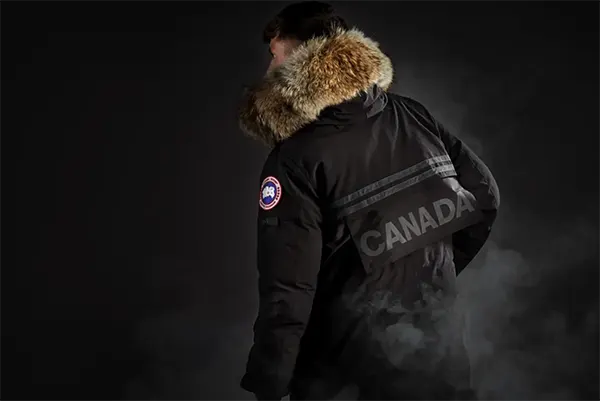
One significant step was the announcement of its transition away from natural fur in new products. This decision aligned the brand with evolving ethical standards while maintaining its focus on performance materials. It also demonstrated the company’s willingness to adapt to changing expectations.
In addition, Canada Goose has invested in circular initiatives, including repair programmes and product longevity strategies. These efforts aim to extend the lifecycle of garments, which is consistent with the brand’s original emphasis on durability and long-term use.
Current Position in the Global Fashion and Outerwear Market
By 2026, Canada Goose occupies a unique position between technical outerwear and luxury fashion. It competes not only with performance brands but also with high-end labels that emphasise design and exclusivity. This dual positioning allows it to appeal to a broad yet targeted audience.
Seasonal collections now include lighter jackets, knitwear, and accessories, expanding the brand beyond heavy winter coats. However, the core identity remains tied to cold-weather expertise, which continues to differentiate it in a crowded market.
The brand’s evolution illustrates a broader trend in the apparel industry: the merging of functionality and style. Canada Goose did not abandon its roots; instead, it reinterpreted them for a new context, where performance and aesthetics are expected to coexist.