
Chloé and the Return of Boho: How Chemena Kamali Revived One of the Defining Aesthetics of the 2000s
Few fashion revivals of the mid-2020s have been as visible as the return of boho, and Chloé has played a central role in bringing the look back into contemporary wardrobes. When Chemena Kamali became Chloé’s creative director in 2023 and presented her first runway collection in February 2024, she reintroduced flowing chiffon, lace, ruffles, generous sleeves, high-waisted denim, heavy jewellery and sensual dresses with an ease that immediately recalled the early 2000s. Yet what followed was not simply another Y2K revival. Kamali knew that the bohemian image associated with Chloé in the 2000s had deeper roots in the house’s history, particularly in the freedom of Gaby Aghion’s original vision and Karl Lagerfeld’s work during the 1970s. By 2026, her approach had developed far beyond its first nostalgic associations. The Paddington bag had returned, romantic dresses had become familiar again on red carpets and in street style, while newer collections introduced folk references, lingerie dressing, unconventional layering and more structured silhouettes. Kamali’s achievement has been to make a recognisable chapter of fashion history feel relevant without pretending that the past can simply be repeated.
Why Chloé Was Always the Natural Home for Bohemian Fashion
Chloé’s connection with relaxed femininity predates the term “boho chic” by decades. Gaby Aghion founded the house in Paris in 1952 with an idea that was unusually progressive for the period: beautifully made clothing should not have to possess the stiffness and formality associated with traditional couture. Chloé developed around ready-to-wear that allowed women to move more naturally while retaining the quality and imagination expected from Paris fashion. That early rejection of rigidity became important to the house’s identity. Lightness, movement and a certain informality repeatedly returned under later designers, which is why flowing dresses and romantic blouses have rarely looked like arbitrary additions to Chloé’s vocabulary.
The 1970s strengthened that identity. During Karl Lagerfeld’s influential years at Chloé, the house became associated with fluid dresses, soft fabrics, decorative details and a glamorous version of freedom that suited the changing way women wanted to dress. The clothes could be sensual without being restrictive and decorative without feeling excessively formal. References to Art Deco, romanticism and the cultural mood of the decade appeared alongside pieces that looked natural in everyday life. This period is essential for understanding Kamali’s work: many details that appear to be references to early-2000s boho actually lead further back to the Chloé of the 1970s.
The 2000s then translated that heritage for a very different generation. Phoebe Philo became creative director in 2001 after working closely with Stella McCartney, and her Chloé combined sheer silk dresses and feminine blouses with stronger tailoring, denim, leather and accessories. The balance mattered. It prevented romantic clothing from appearing too precious and helped create the slightly undone style that became influential during the decade. Accessories also became increasingly important. Chloé introduced the Paddington bag in spring 2005, identifiable by its oversized padlock and substantial leather construction, while wedges introduced in 2006 further reinforced the house’s connection with 1970s-inspired dressing. These pieces became part of the visual memory now associated with the period.
Chemena Kamali Returned to a House She Already Knew
Chemena Kamali did not arrive at Chloé as an outsider attempting to reconstruct this history from photographs. Born in Germany in 1981, she studied at Central Saint Martins in London and completed her master’s degree in fashion under Louise Wilson in 2007. More importantly for Chloé, her relationship with the house had begun years earlier. She worked there as a young designer during Phoebe Philo’s tenure and later returned as design director under Clare Waight Keller. From 2016, she worked as women’s ready-to-wear design director at Saint Laurent under Anthony Vaccarello. Chloé announced her appointment as creative director in October 2023, making the job a return to a house that had already shaped a significant part of her professional life.
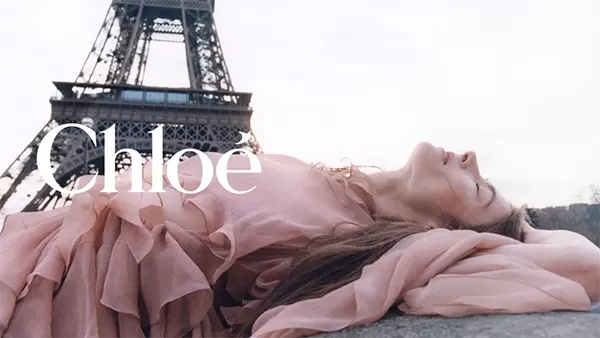
Her first runway collection for Chloé, shown for autumn/winter 2024 in Paris on 29 February 2024, made that familiarity immediately visible. There were translucent dresses, cascading ruffles, generous blouses, capes, leather pieces, wide belts and denim worn with abundant jewellery. The silhouettes had the movement expected of Chloé, but they were not presented as delicate period costumes. A soft dress might be combined with substantial boots or leather, while transparent fabric could sit beside practical outerwear. The styling provided enough tension to keep the romantic elements from becoming overly sweet.
Kamali has also resisted reducing her work to the label “boho chic”. That distinction helps explain why the revival has lasted beyond a single season. Her references include Gaby Aghion, Lagerfeld’s 1970s collections, the wardrobes of women who influenced her personally and her own experience of working at Chloé during the 2000s. The result is less about reproducing a familiar photograph of early-2000s celebrity style and more about recovering an attitude: dressing that can be sensual, instinctive, decorative and comfortable at the same time. That approach gave Chloé a clearly recognisable identity again without requiring every collection to look identical.
How Chemena Kamali Rebuilt Boho for the 2020s
The materials and proportions of Kamali’s early Chloé collections provided the most immediate connection with bohemian dressing. Chiffon, lace, transparent layers, ruffles and long fluid skirts returned, often in pale neutrals, powdery colours, earthy tones or deeper shades that prevented the clothes from appearing overly delicate. Dresses moved around the body rather than defining it through rigid construction. Blouses had volume, sleeves were generous and hems frequently appeared asymmetric or softly gathered. These elements referenced familiar Chloé codes while offering a clear alternative to the controlled minimalism that had dominated a large part of luxury fashion immediately before the revival.
Styling was equally important. Kamali rarely treated boho as a complete costume that required every stereotypical element at once. Romantic dresses appeared with strong belts, leather boots or oversized outerwear. High-rise jeans could be worn with a loose silk blouse and layers of jewellery. Metallic cuffs, long necklaces and belts added weight to transparent fabrics. Later collections incorporated clogs, wedges, sandals and substantial bags alongside the softer garments. This mixture made individual pieces easier to separate from the runway look. A lace blouse did not require a full 1970s wardrobe around it, just as a wide belt or suede accessory could introduce the mood without turning everyday clothing into festival dressing.
Spring/summer 2025 showed that Kamali was already willing to complicate the formula. The collection included embroidered white blouses, lace, floral fabrics, swimwear and voluminous pantaloon-style trousers inspired by historical undergarments. Tiny bloomers and ballooning trousers looked playful rather than conventionally glamorous, while transparent fabrics and soft dresses continued the romantic thread established during her debut. These choices prevented Chloé from being trapped by its own successful revival. Instead of repeating the first season’s chiffon dresses, Kamali expanded the wardrobe and demonstrated how the same idea of freedom could lead to unexpected proportions and combinations.
Why the Look Spread Far Beyond the Chloé Runway
The return of boho gained momentum because Chloé’s clothes quickly moved from the runway into highly visible real-world styling. Sienna Miller, whose early-2000s wardrobe remains closely associated with the original boho-chic moment, attended Kamali’s debut show and later wore Chloé again. Other public appearances broadened the association. Zoe Saldaña wore Chloé to the 2024 Met Gala, Daisy Edgar-Jones appeared in pieces from Kamali’s collection while promoting Twisters, Sienna Miller wore a sheer white lace Chloé dress in Venice, Suki Waterhouse appeared in a flowing peach-toned look and Maya Rudolph chose a dusty rose Chloé gown for the Emmys. The clothes were being seen in very different settings rather than belonging exclusively to fashion-week styling.
Timing also helped. By 2024, fashion had spent several seasons concentrating on restrained wardrobes, neutral colours and deliberately discreet luxury. Romantic volume, visible jewellery, lace and flowing fabric offered an obvious visual contrast. At the same time, younger shoppers had already become accustomed to reassessing styles from the late 1990s and early 2000s. Chloé therefore arrived at a moment when nostalgia was already powerful, but Kamali gave it a more coherent reference point. Instead of pulling unrelated Y2K details together, she could work with genuine designs, silhouettes and accessories from the history of one house.
The most useful aspect of the revival is that contemporary boho does not depend on wearing an entire look exactly as it appeared on the catwalk. Wide denim can be combined with a loose blouse; a ruffled dress can work beneath a simple coat; a suede bag can bring texture to otherwise restrained clothing. Lace, metallic jewellery, soft leather, gathered skirts and earthy colours can all function independently. This flexibility is one reason the aesthetic has proved more durable than many short-lived nostalgia trends. It provides a recognisable mood without demanding a rigid uniform, which is particularly compatible with the increasingly individual way many people approach personal style.
From 2000s Nostalgia to a Lasting Chloé Language
By 2025, Kamali had started to broaden the identity she had re-established. Her autumn/winter 2025 collection retained the romanticism associated with her Chloé but moved away from repeating the most obvious image of the “Chloé girl”. The accompanying winter campaign drew on the atmosphere of the French Riviera in the early 1970s and the creative mythology surrounding Villa Nellcote, reinforcing how frequently Kamali looks beyond the 2000s themselves. That same year also brought one of the clearest links with the earlier decade: the Paddington bag returned approximately 20 years after its 2005 debut. Its revival placed an authentic Chloé object from the period back into circulation rather than merely creating a new accessory designed to resemble one.
Summer 2026 demonstrated another shift. For the collection, titled Entre Deux, Kamali considered what the idea of couture could mean within a house originally built around freedom from couture convention. Draping became more deliberate, dresses were ruched and knotted around the body, floral prints appeared in sculpted yet mobile forms and sarong-like skirts sat beside cropped blouses, lightweight outerwear and long coats. The collection retained Chloé’s familiar sense of movement, but the construction appeared more considered. Bohemian ease had therefore become one element within a larger design language rather than the sole subject of every look.
Chloé’s 2026 collections also show how far Kamali has moved from a straightforward Y2K revival. Her pre-fall work focused increasingly on individuality and on wardrobes that develop gradually instead of being assembled according to fixed styling rules. For autumn/winter 2026, folk references became more pronounced, including research into Dutch traditional dress, floral bodices, checks, lace and garments connected with ideas of family, community and things passed from one generation to another. The resulting prairie and folk elements still shared something with bohemian fashion — movement, craft, layering and an interest in clothing with emotional history — but the reference point was much wider than the early 2000s.
What Chloé’s Boho Revival Says About Fashion in 2026
The Chloé story illustrates why some revivals feel more convincing than others. Nostalgia becomes limited when recognisable details are reproduced without understanding why they mattered originally. Kamali had an unusual advantage: she had worked inside Chloé during the era that many people now remember nostalgically, while also having access to decades of earlier design history. She could therefore connect Philo’s 2000s wardrobe to Lagerfeld’s 1970s work and then back to Aghion’s belief in clothing that combined quality with freedom. The continuity gives the newer collections a foundation stronger than a passing Y2K trend.
It also explains why the current version of boho is broader than its old stereotype. The early-2000s image is often reduced to peasant blouses, long skirts, oversized belts, boots and celebrity festival photographs. Chloé has retained some of those recognisable ingredients while adding masculine tailoring, lingerie pieces, balloon denim, leather jackets, structured draping and folk references. Femininity remains central, but it does not have to mean fragility. The wearer can combine softness with practical outerwear, decorative accessories with relaxed denim, or transparent fabric with heavier leather. That tension gives the clothes much of their contemporary character.
By 2026, it is therefore more accurate to see Kamali’s Chloé as an evolution rather than a continuing 2000s revival. Her debut undeniably helped bring bohemian fashion back into the centre of the conversation, and the return of the Paddington strengthened the connection with the period. Yet the collections that followed have continued to change. Couture references, folk dress, historical underwear, modern layering and the wardrobes of younger women now sit alongside the familiar chiffon and ruffles. The real significance of Chloé’s boho comeback is not simply that an old aesthetic became fashionable again. Kamali demonstrated how a house can use its own history as working material, preserving what still feels emotionally relevant while allowing the clothes to belong to a different generation.